
Men’s Hair Loss Treatment in Kirkland, WA
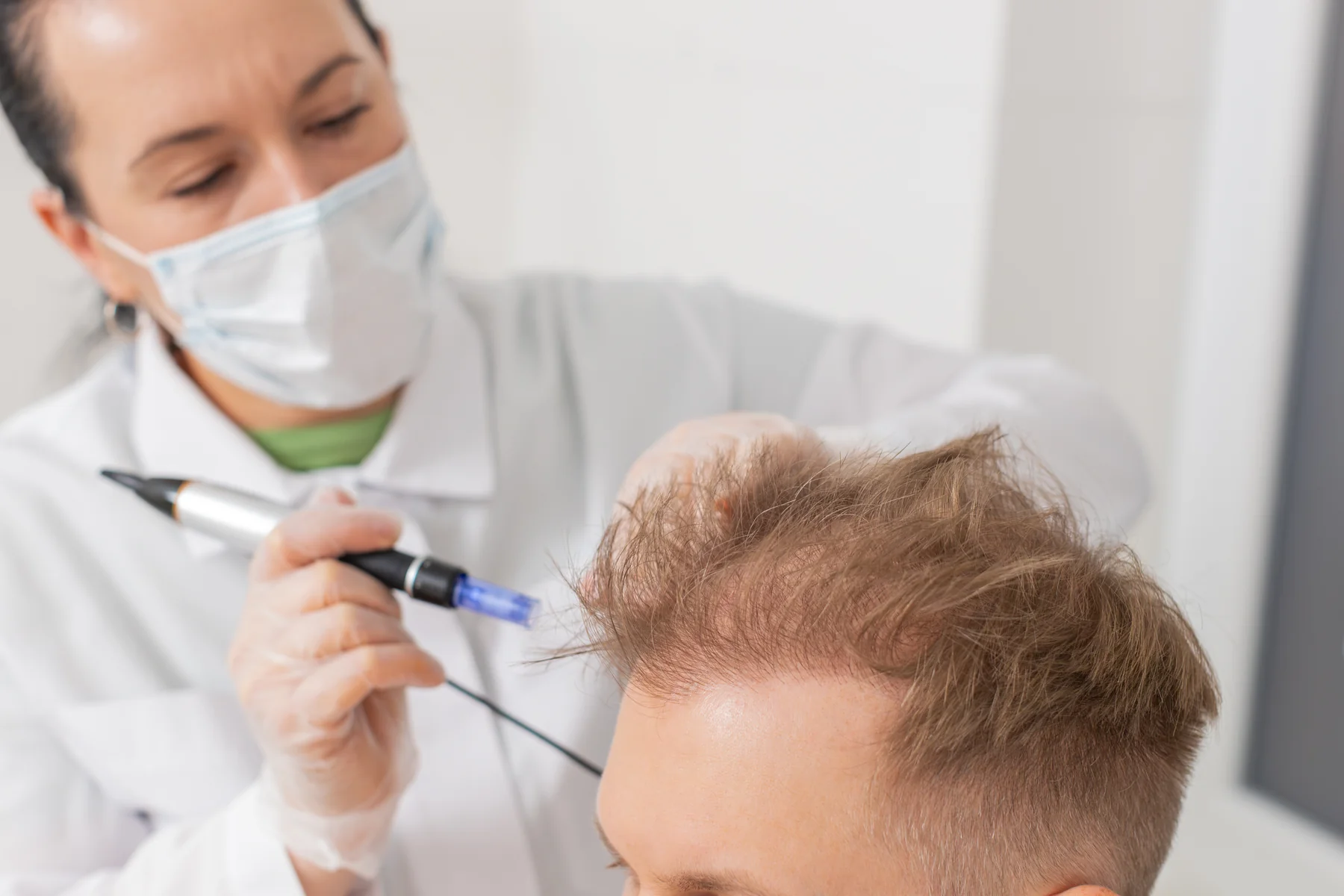
What Is Male Hair Loss?
Male hair loss is the gradual thinning, recession, or complete loss of hair that affects a significant majority of men at some point in their lives. It most commonly begins at the temples or crown and progresses over time, sometimes slowly over decades, sometimes noticeably within just a few years. For many men, it starts earlier than expected and moves faster than they’d like. In Kirkland, where weekends spent on the water, on the trail, or out on the boat mean hats and hoods that create the perfect conditions for scalp stress, and where the UV reflecting off the lake adds up across years of genuinely active outdoor life, the biology tends to get a little extra help moving in the wrong direction.
What makes it particularly frustrating is how inevitable it can feel. Society treats it as something men should simply accept, but that doesn’t reflect how it actually feels to watch your hairline shift in the mirror every morning. At Lake Washington Medical Aesthetics, we take male hair loss seriously, offering a comprehensive range of men’s hair loss treatment options that address the condition at every stage, from early thinning to more advanced recession. Whether you want to slow the process, stimulate regrowth, or explore restoration, we’ll build a plan around where you are right now.
What Causes Male Hair Loss?
Male hair loss is rarely the result of one single factor. It typically develops through a combination of:

DHT Sensitivity
Dihydrotestosterone (DHT) is the primary driver of androgenetic alopecia in men. When hair follicles are genetically sensitive to DHT, they miniaturize over time, producing progressively finer strands until growth stops entirely.
Genetics
Pattern baldness is largely inherited. If it runs on either side of your family, your risk is significantly higher, and it can follow a similar pattern to your relatives.
Age
The likelihood and pace of hair loss increase with age, though it can begin as early as the late teens or early twenties in some men.
Hormonal Imbalances
Fluctuations in testosterone, thyroid hormones, or cortisol can accelerate shedding and disrupt the normal hair growth cycle.
Chronic Stress
Prolonged physical or emotional stress can trigger telogen effluvium, a condition where a large number of follicles simultaneously shift into a resting phase, causing sudden and widespread shedding.
Nutritional Deficiencies
Low levels of iron, zinc, vitamin D, and biotin are commonly associated with accelerated thinning and reduced hair density.
Scalp Health
Chronic inflammation, excess sebum, or conditions like seborrheic dermatitis can compromise the follicular environment and accelerate loss over time.
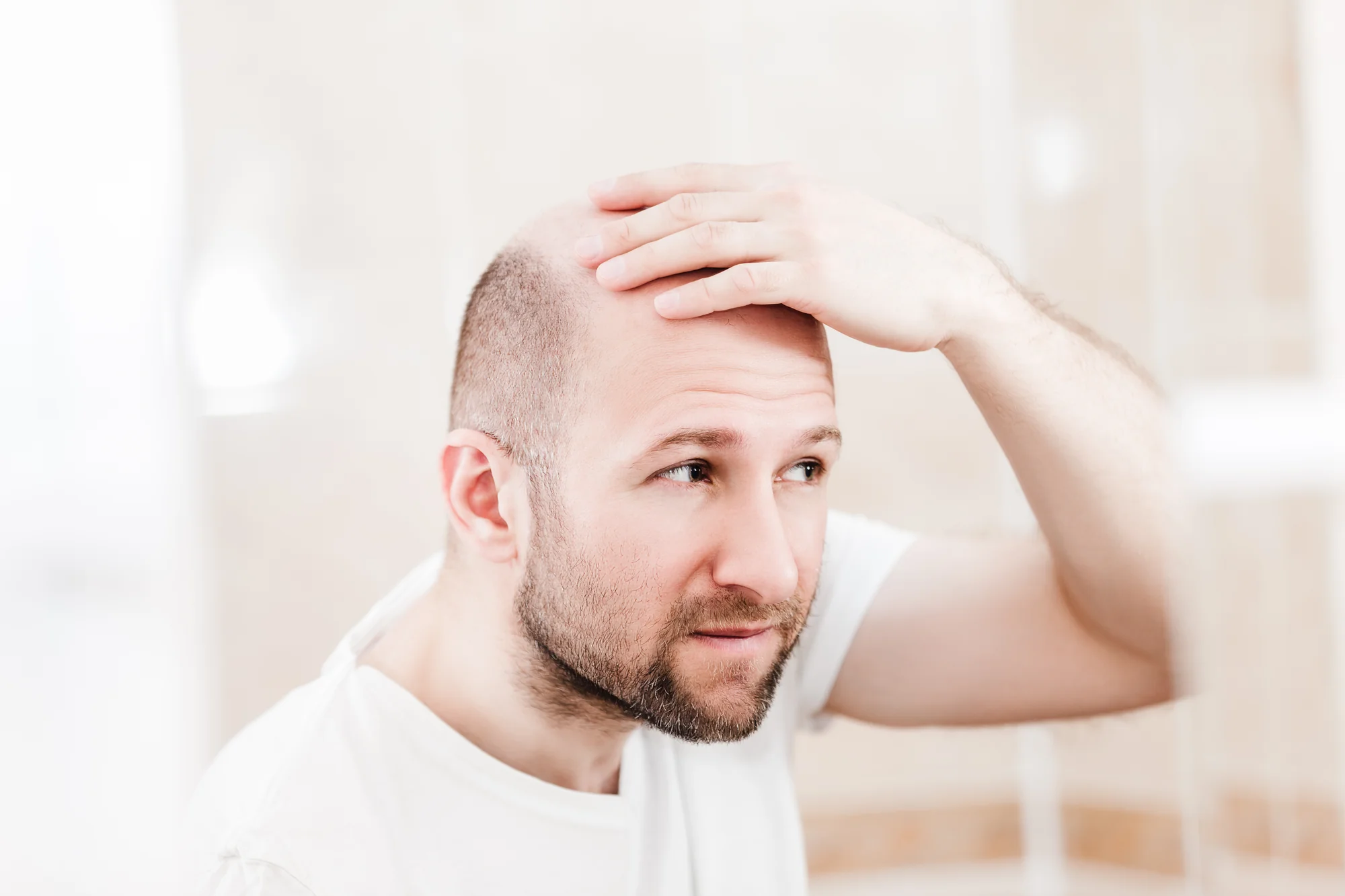
Men's Hair Loss: Symptoms and Signs
Hair loss in men can present in several recognizable patterns and signs, including:
- A receding hairline at the temples forming an "M" shape
- Thinning or balding at the crown that gradually widens
- Overall reduced density that makes the scalp more visible
- Finer, shorter strands in areas that used to have full coverage
- Increased shedding noticed on pillows, in the shower, or on a brush
- A hairline that has shifted noticeably compared to photos from a few years ago
The earlier these signs are addressed, the more options are available, and the better the outcomes tend to be. If any of this sounds familiar, a proper evaluation is worth doing sooner rather than later.
Professional Men's Hair Loss Treatment
At Lake Washington Medical Aesthetics, we offer one of the most comprehensive scalp rejuvenation treatments for men in the area. Rather than defaulting to a single solution, we match each patient to the treatment, or combination of treatments, that best fits their stage of loss, scalp health, lifestyle, and goals. Our team is experienced across the full spectrum of non-surgical hair restoration options as well as surgical approaches for men who are ready for more permanent results.
Our professional treatment options include:
De|Rive Hair Restoration is an advanced follicular treatment system that works at the scalp level to reactivate dormant follicles, extend the active growth phase, and improve the overall environment for sustained regrowth. It combines targeted active compounds with precision delivery technology to address thinning at its root.
Finasteride is an oral DHT blocker treatment that works systemically to reduce the levels of DHT reaching the follicle. Finasteride is one of the most evidence-backed pharmacological options for slowing and halting androgenetic progression in men. It’s most effective when started early and used consistently as part of a broader hair health protocol.
Minoxidil is a topical treatment applied directly to the scalp to stimulate blood flow, extend the growth phase, and support regrowth in areas of active thinning. Minoxidil works well as a standalone maintenance option or as a complement to other treatments in a layered approach.
PRP Scalp Injections, PRP therapy for men involves drawing a small amount of your blood, concentrating the growth factors through centrifugation, and injecting the resulting plasma directly into the scalp. These growth factors stimulate follicular activity, improve scalp health, and support the regrowth of thinning hair, making it one of the most popular hair regrowth solutions for men seeking a natural, biology-driven approach.
FUE Hair Transplant is a surgical hair restoration technique that permanently transfers healthy hair follicles from a donor region, usually the back and sides of the scalp, to areas experiencing thinning or baldness. FUE produces natural-looking, permanent results and is best suited for men with stable, well-defined areas of loss who are ready for a long-term structural solution.
Your provider will assess your pattern of loss, scalp condition, and goals to recommend the right starting point, whether that’s one treatment or a combination approach that addresses multiple factors simultaneously.
What to Expect During Your Men's Hair Loss Treatment
Consultation:
Your provider evaluates your hair loss pattern, scalp health, and personal history to recommend the most appropriate treatment pathway and set realistic expectations for your outcomes.
Treatment:
Depending on the approach selected, sessions range from topical applications and injections to in-clinic procedures. We will guide you through each session before you begin.
Post-Treatment:
Recovery and downtime vary by treatment. De|Rive and PRP involve minimal to no downtime, while FUE requires a short recovery period. Your provider will outline what to expect after each session.
Results:
Reduction in shedding will be noticed within the first few weeks of treatment. Improvements in density and coverage usually take 3 to 6 months, with ongoing progress possible with a consistent protocol.
Men's Hair Loss Treatment Recovery & Aftercare
Aftercare varies depending on the treatment used. For De|Rive and PRP, avoid washing the scalp for 24 hours post-session and avoid harsh styling products or heat tools during the initial recovery window. For FUE, your provider will give detailed post-operative instructions covering washing, activity restrictions, and follow-up care. Across all treatments, protecting the scalp from excessive sun exposure and maintaining a supportive at-home care routine will help maximize your results.
Who Is a Good Candidate For Men's Hair Loss Treatment?
You may be a good candidate for male hair loss treatment if you:
Whether you’re in the early stages of thinning or dealing with more advanced loss, there’s likely a treatment pathway that makes sense for your situation. A thorough consultation will clarify exactly where you stand and what’s realistically achievable.
Frequently Asked Questions
How do I know which treatment is right for me?
That’s exactly what the consultation is for. Your provider will assess your loss pattern, scalp health, and goals and recommend the most appropriate option, or combination, for your specific situation.
Is PRP therapy painful for male hair loss?
Scalp injections involve some mild discomfort, but topical numbing is applied beforehand to minimize it. Most patients tolerate the procedure well.
Can I use Finasteride and Minoxidil together?
Yes, combining both is a common and well-supported approach. They work through different mechanisms, so using them together tends to produce better results than either alone.
How soon will I see results?
Most patients notice reduced shedding within a few weeks. Visible density improvements typically take 3 to 6 months regardless of the treatment used.
Is a FUE hair transplant permanent?
The transplanted follicles are permanent; they’re taken from areas resistant to DHT. However, existing non-transplanted hair may continue to thin, which is why many patients combine FUE with ongoing medical therapy.
What's the difference between De|Rive and PRP?
Both target follicular health, but through different mechanisms. De|Rive uses targeted active compounds delivered to the scalp, while PRP uses your own concentrated growth factors.
Your Hair. Your Confidence. Your Call.
Hair loss doesn’t have to follow the path you’ve been dreading. At Lake Washington Medical Aesthetics, we give you real options, backed by clinical expertise and tailored to where you actually are, not a generic protocol built for everyone.
Schedule your consultation today and take the first step toward a fuller, healthier head of hair. Call 425-202-6205 or book online.


Start Your Aesthetic JOURNEY TODAY
Book Your Appointment Online
You’ve done the research, now let’s build a plan that’s actually built around you. Whether you’re coming in for the first time or ready to take the next step in your skin journey, our team is here to make the process easy and the experience worth your time.